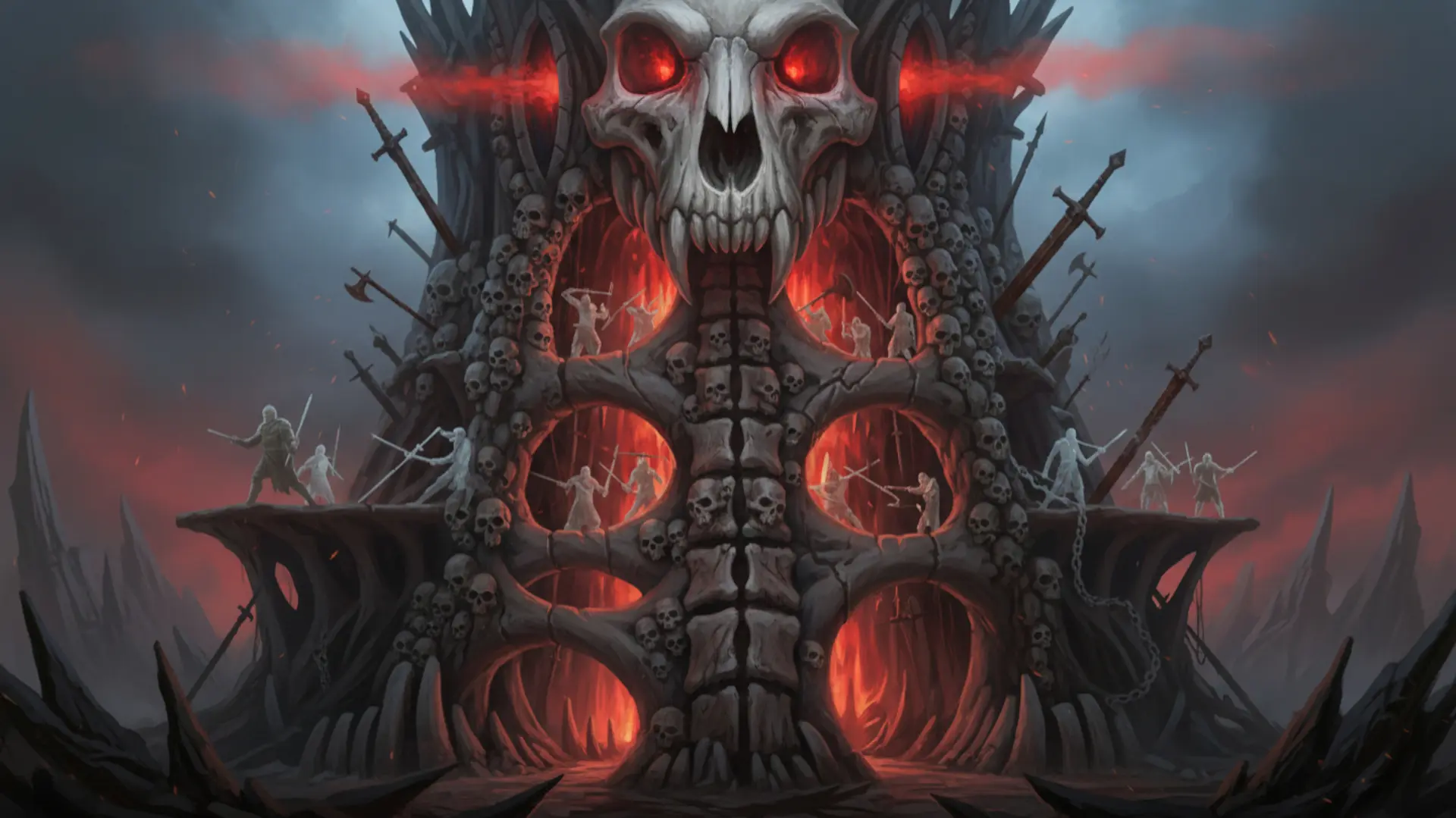
The Beast-Skull Tower
Where the Dead Refuse to Rest
Orc TowerThe Tower
The Beast-Skull Tower rises from the blood-soaked earth of Skullgar, a monument built from the bones of great beasts and greater warriors. For centuries, the orcs interred their mightiest champions here, believing their spirits would strengthen the living. The spirits have returned—but they bring war, not blessing.
The tower is formed from the skeleton of a creature so massive that its skull alone serves as the upper floors. No living orc remembers what this beast was called or how it was killed. The records say only that it was "the first victory," and that its bones would protect the orcish people forever.
They neglected to mention that the beast might want revenge.
History
The orcs have always honored their dead through combat. A warrior's spirit, they believe, grows stronger with each battle fought in their name. The Beast-Skull Tower was built to house the most honored dead, those whose spirits were so mighty that they deserved a palace of their own.
The shamans established rituals to communicate with these ancestral spirits. Warriors would enter the tower seeking blessings before battle, and the spirits would grant them visions, guidance, and sometimes direct intervention. It was a sacred pact between the living and the dead.
The pact has been broken.
The Night of Rising came without warning. The honored dead burst from their tombs, attacking the living warriors who had come to pay respect. The ancestors spoke, but their words were accusations, not blessings. They claimed the living had broken an ancient promise—a promise so old that no living orc remembered making it.
Floors
Floors 1-5: The Ossuary
The lowest levels of the tower, where common warriors were laid to rest. Their bones now animate themselves, forming skeletal warriors that remember enough of their skills to be dangerous. The walls are lined with skulls that watch and whisper.
Floors 6-10: The Champions' Rest
Where warriors of particular renown were interred. These dead are more dangerous—they retain not just skill but tactics, coordinating their attacks with an intelligence that mere skeletons should not possess. The trophies mounted on these walls sometimes join the fight.
Floors 11-15: The Proving Grounds
In life, this was where warriors tested themselves against illusions of ancient foes. Now the illusions have become real, manifestations of every creature the orcs ever defeated. The spirits have turned the proving grounds into a gauntlet of revenge.
Floors 16-20: The Hall of Chieftains
The resting place of legendary war leaders, whose spirits commanded armies in life and command the dead in death. These spirits are fully aware, able to speak and reason—though reason has not made them merciful. They demand answers the living cannot provide.
Floors 21-24: The Beast's Spine
The tower's structure becomes organic here, formed from the actual vertebrae of the great beast. The creature's spirit has partially awakened, not as a thinking being but as pure animal rage. The bone itself attacks intruders, forming spikes and crushing passages.
Floor 25: The Skull Throne
Within the great skull itself, the Ancestor King holds court. This chamber was the heart of orcish ancestral worship, where the greatest of the dead advised the greatest of the living. Now it is a throne room where an undead king pronounces judgment on all who enter.
The Ancestor King
The Ancestor King was the first orc—the original warrior from whom all orcs are descended. His spirit has been bound to the tower for so long that he has forgotten what it was like to be alive. All he remembers is the promise, and the betrayal.
According to the King, the living orcs swore to release the dead after a certain time—to perform a ritual that would allow the ancestral spirits to move on to the eternal war that awaits beyond death. Generations passed, and the ritual was forgotten. Now the dead are trapped, denied the afterlife they were promised, and they blame their descendants.
Defeating the Ancestor King requires more than combat prowess. The living must either fulfill the ancient promise—if they can discover what it was—or prove that the promise was never valid. Either way, it requires confronting the deepest traditions of orcish culture.
Atmosphere
The Beast-Skull Tower feels like a challenge. The dead here do not haunt—they wait, eager for combat, for the chance to test themselves against living warriors. The air smells of old blood and bone dust. Battle cries echo from empty chambers. And everywhere, there is the sense of being judged by warriors who have already proven themselves in the ultimate test.
"Our ancestors watch us always. Now we understand that they watch with hatred." — Shaman Grakka, after the Night of Rising